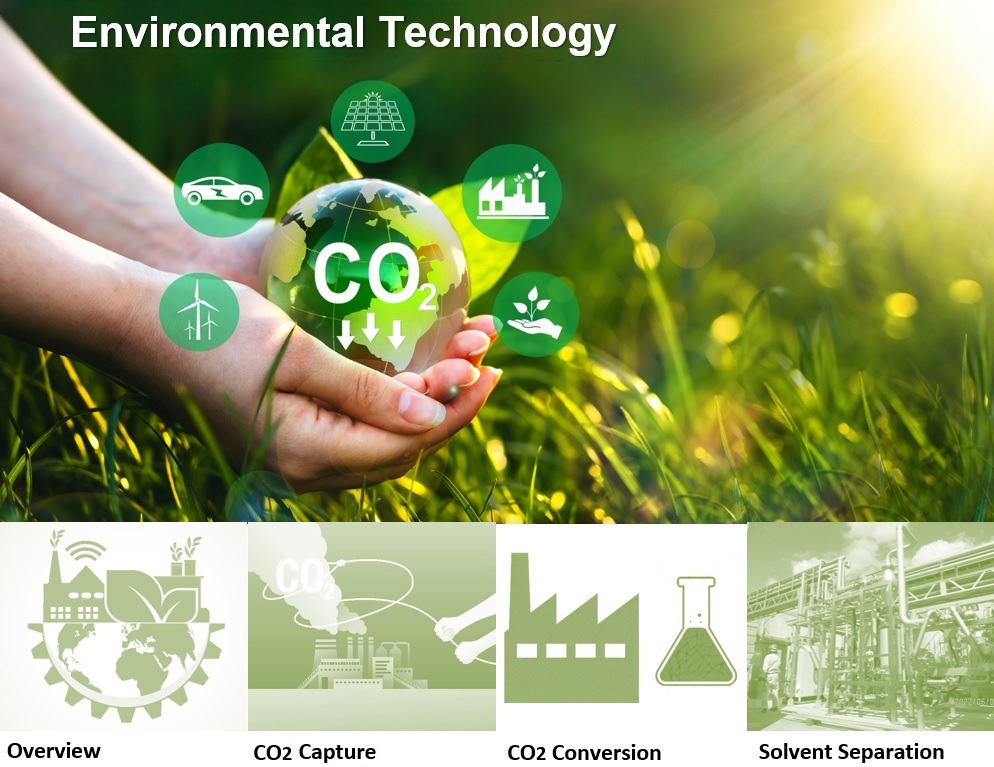
Developing advanced technologies to accelerate carbon neutrality and circularity
We provide innovative separation technologies that help accelerate decarbonization, carbon reduction, resource recycling, and circular economy initiatives across a wide range of industrial processes, including semiconductor manufacturing, petroleum, energy, and beverage production.
Solvent Separation Membrane
Nitto is developing an advanced membrane system for solvent recovery and recycling from wastewater generated in semiconductor manufacturing and other industries. Through pilot testing using actual wastewater from semiconductor fabs, we are evaluating the technology for commercial-scale implementation.
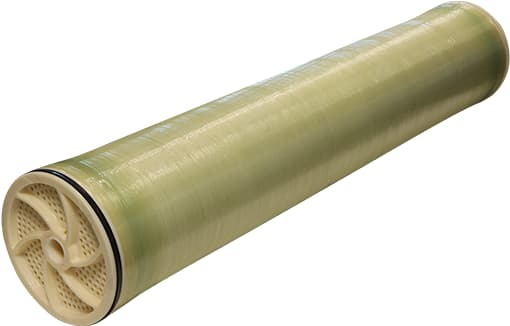
Semiconductor manufacturing consumes large amounts of water, creating challenges in wastewater treatment and resource recovery. Nitto's solvent separation system regenerates wastewater while recovering and concentrating solvents, reducing waste disposal costs and promoting water and solvent recycling.
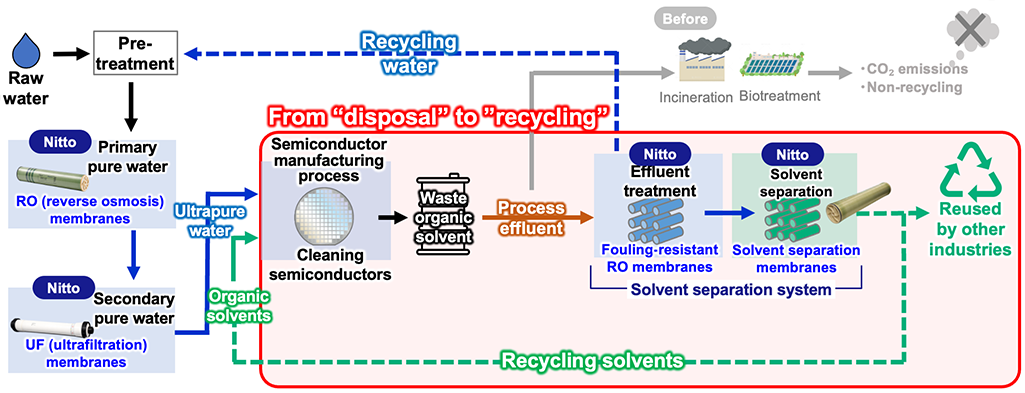
Our Membrane Products can be found here.
Unlike conventional RO membranes, Nitto's solvent-selective membrane efficiently separates and concentrates IPA and other solvents from wastewater. By combining water treatment and solvent separation membranes, we provide optimized recycling solutions for a wide range of wastewater conditions.
*IPA: Isopropyl Alcohol

Pilot tests using actual wastewater from Nitto facilities and semiconductor fabs have confirmed the target performance. Nitto is now working toward commercializing the system.
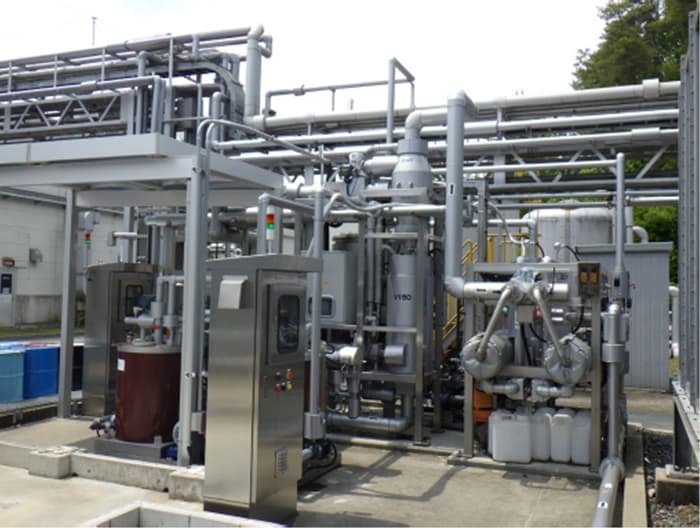

Nitto has developed a compact, modular membrane-based carbon capture technology that efficiently captures CO₂ from small to mid-sized exhaust sources.
This CCUS technology adds to the suite of solutions helping drive progress toward net‑zero emissions by 2050.
Reducing CO₂ emissions is one of the world's most pressing challenges. Nitto's membrane technology enables efficient CO₂ capture from industrial combustion flue gas and other emission sources, helping customers advance Carbon Capture, Utilization and Storage (CCUS) initiatives and accelerate their decarbonization goals.
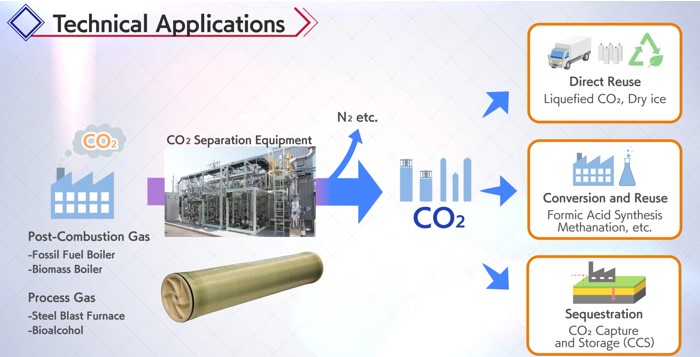
Compared with conventional chemical absorption processes, Nitto's membrane technology offers:
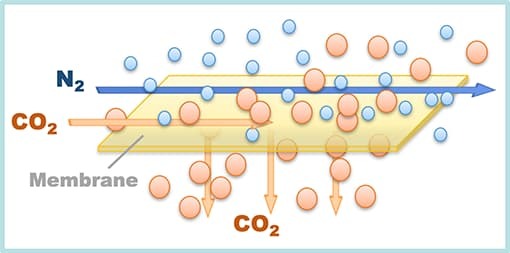
Nitto has been developing membrane technologies through decades of experience in water treatment. Because CO₂ and N₂ molecules are similar in size, conventional molecular sieving has limited effectiveness. Nitto's proprietary membrane selectively separates CO₂ based on its affinity with the membrane, enabling efficient CO₂ capture from industrial gas streams.
Nitto is advancing the development of CO₂ capture technologies through a joint development agreement with Aqualung Carbon Capture AS, a Norway-based company specializing in CO₂ separation membrane technology. By combining Nitto’s expertise in membrane and thin-film coating technologies and manufacturing capabilities with Aqualung’s facilitated transport membrane technology, the two companies are developing a high-performance, cost-effective CO₂ capture solution. The partnership aims to conduct demonstration testing during fiscal year 2026, followed by further business expansion. Looking ahead, we will also explore collaborations with global energy companies to accelerate the commercialization of CO₂ capture technologies and contribute to the realization of a more sustainable society.
Related News Release: Click here.
Adobe Reader is required to view PDF files.
If not yet installed, please download it from the Adobe website.