 |
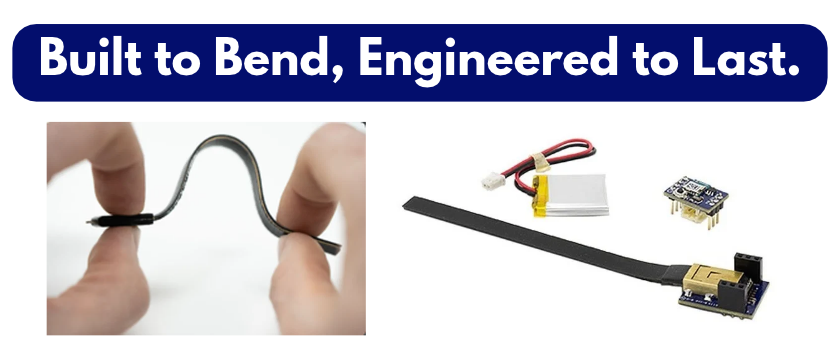
At the core of NBT’s platform is a simple but powerful principle: when the silicone material stretches or bends, its capacitance changes. Unlike resistive-based technologies, NBT’s sensors function as capacitors, enabling improved measurement stability and reduced power requirements.
Colin Eichinger, VP of Engineering at NBT, explains:
“We set up the sensors as capacitors, whereas a lot of other flex technology is resistive based. This allows our sensors to be more accurate and require less power than others on the market.”
Material selection further strengthens the design. Durability is one of the defining advantages, says Don Saxby, NBT’s Chief Technology Officer.
“We’ve been able to maintain millions of cycles without failure,” he notes. “Under normal operating conditions, the sensors continue performing even after extensive bending and stretching.”
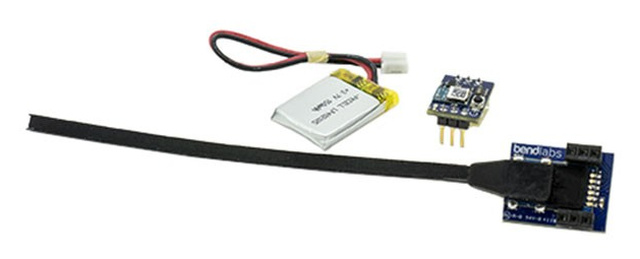 |
Turning a flexible sensing concept into a scalable product required more than material innovation. It demanded process control, reproducibility, and a manufacturing system capable of maintaining consistent electrical properties across every printed layer.
Early development used equipment adapted from traditional screen-printing methods, but full-scale production required more advanced solutions. Colin reflects on the engineering challenges:
“We had to invent the materials we were using - compounding different things into silicones to make them conductive enough to carry current but also maintain their structural properties.”
Achieving the right balance between conductivity and printability required continuous iteration, especially as the team honed layer thickness and uniformity.
Manufacturability quickly became a defining focus. According to Don, reproducibility was one of the most significant hurdles the company overcame. Today, specialized printing systems support higher-volume production while maintaining consistent sensor performance. NBT is actively preparing for expanded manufacturing capacity in anticipation of demand from robotics and other high-volume markets.
 |
While the platform was originally developed with medical-related* applications in mind, its versatility has driven rapid expansion into robotics, automotive, and industrial systems. In robotics, the sensors enable articulated motion tracking, while new pressure and force-sensing configurations support more refined tactile feedback.
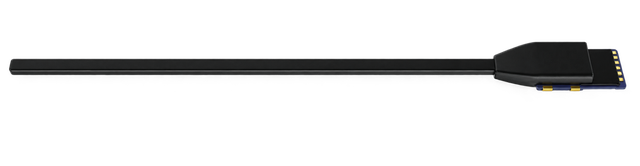
A key differentiator lies in geometric flexibility. Because the silicone elastomer itself acts as the sensing element, sensors can be printed in a wide range of shapes and configurations to meet specific application needs. This design freedom enables integration into compact or irregular spaces where rigid components may not be feasible.
Medical-adjacent* environments present additional opportunities - particularly where durability, sterilization compatibility, and repeatable performance are essential.
*Note: This product has not yet been submitted for review and approval by the FDA as a medical device.
As Don observes, the potential use cases continue to grow:
“There’s a way we can make our sensor work across various applications. New possibilities emerge as industries push further into flexible electronics and more responsive system design.”
 |
Looking ahead, NBT is focused on miniaturization and expanded sensing architectures. Thinner designs will enable integration into increasingly compact systems, particularly in robotics and human-machine interfaces where space is at a premium.
The development of multi-region sensing configurations may allow detection of localized force distributions rather than a single measurement point - supporting more advanced tactile feedback systems and nuanced motion tracking.
These innovations reflect a broader industry shift toward intelligent, adaptive systems. As products become more interactive and design constraints tighten, sensing technologies must evolve accordingly.
By combining silicone elastomer materials, capacitance-based measurement, and scalable manufacturing expertise, Nitto Bend Technologies does not simply produce flexible sensors – they are shaping a more adaptable foundation for next-generation innovation